LED Laboratory Technology
LED lighting elements are increasingly finding their way into almost every area of modern life. This is based, among other things, on the fact that...
• the increasing light emission,
• a constantly expanding color spectrum,
• a long service life and
• the good availability..

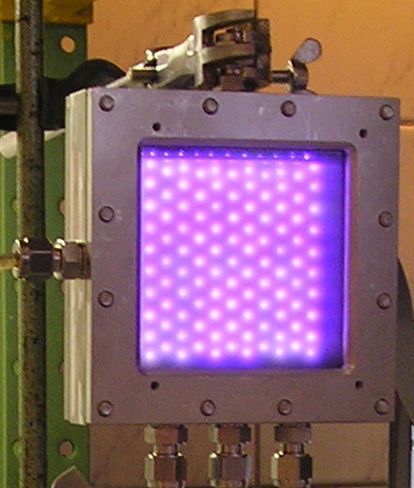
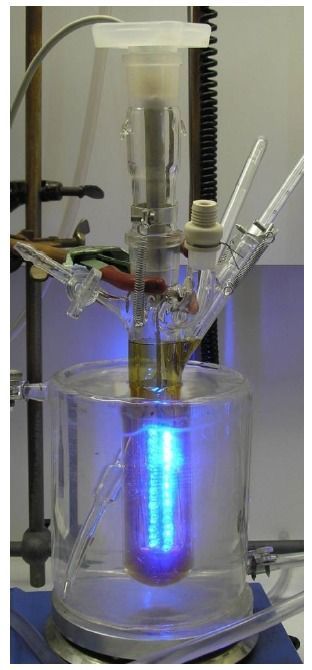
This opens up a wide range of possibilities for users. In addition to the classic fields of visualization and lighting, new applications are emerging, for example in the chemical industry. Here, the company Innotas, within the framework of the TRAEKAT research project, has developed a novel UV LED panel with associated control electronics. The LEDs to be controlled are combined in various form factors (see example photos: panel shape for use in an LED reactor).

Of course, we can also offer you suitable LED rods for smaller experimental setups.
wM-BUS Gateway
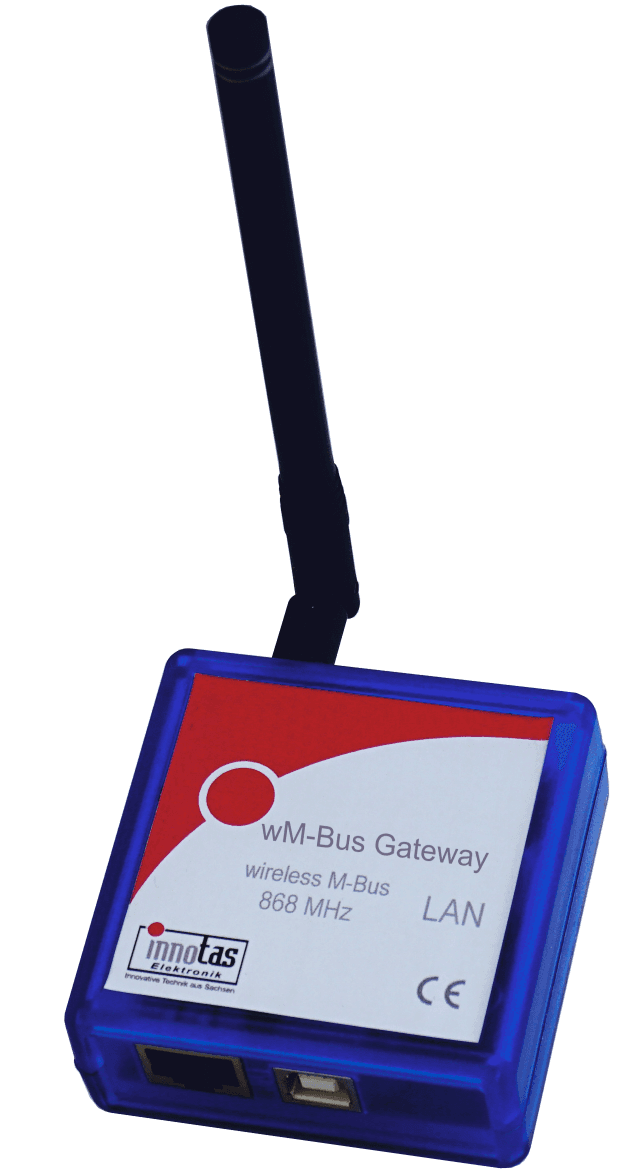
The wM-Bus Gateway receives wireless M-Bus protocols in T/C/S mode, filters them as needed, stores them temporarily, and sends them to a server via an IP connection.

The gateway does not have a mobile data connection. It only uses existing networks. The gateway is particularly suitable for stationary reception of wM-BUS protocols using an existing internet connection. Internet routers are usually already in place. In most cases, no changes need to be made to the router settings.
Simply plug the gateway into the router's USB port (optionally with a USB power supply) and connect it to the router with a network cable.

The gateway can optionally be parameterized via a website, USB interface or via the wM-BUS gateway server.
The received wM-BUS protocols can be pre-filtered in the device by manufacturer, medium code and/or by individual IDs.
The gateway sends the received and filtered data to the server either immediately, hourly, daily, or monthly.
The free "wM-BUS to TCP Gateway Server" can be used as the server, or an application developed by the user.