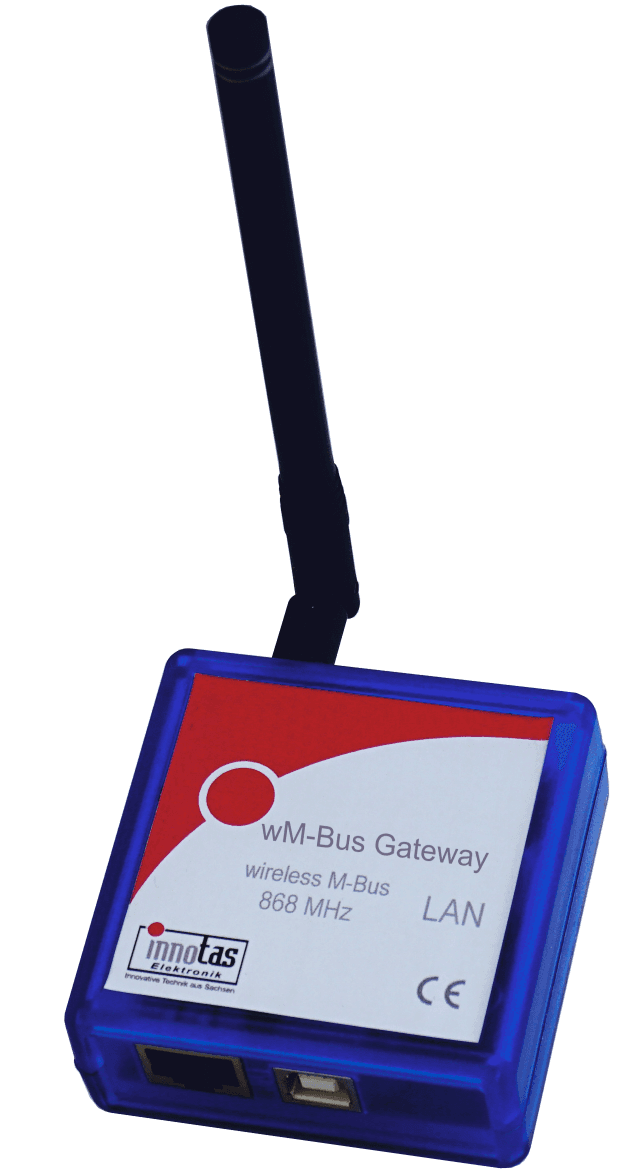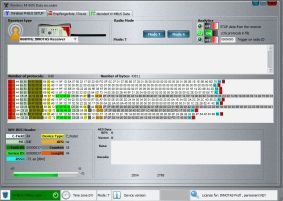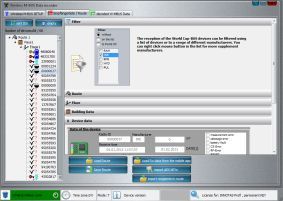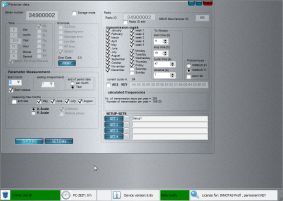
The Meter Device Commander, or MDC for short, is a tool for receiving and evaluating wM-Bus data. The received protocols can be analyzed, decrypted, and decoded. User-defined reception lists allow for the creation of meter reading routes for individual mobile meter readers. To simplify further processing in billing software, the decoded data can be semi-automatically saved to *.csv files using an export format. These route files can then be imported into the Android app "wM-Bus Reader." The wM-Bus data received by the app can then be transferred from the mobile device to the MDC (e.g., via email). This data is then decrypted and decoded within the MDC and saved according to predefined formats. This significantly automates the meter reading process and simplifies further processing.
Furthermore, the MDC as a platform offers many tools for parameterizing and reading out various metering products.
An integral part of this are the tools for the EHKV from INNOTAS ELEKTRONIK.
You can purchase the MDC with the following options:
- wM-Bus reception and evaluation
- EHKV: Reading and parameterizing
- Thermometer: Reading and parameterizing
- Water meter: Reading and parameterizing
Various tools are available for receiving and analyzing wM-Bus protocols.
For analysis purposes, triggering can also be performed on individual telegrams/devices.
For the routine processing of mobile data collection procedures, routes can be created specifying the individual houses/floors and measuring points.
Position information or information on the mounting location as well as the respective AES key can be stored for each device.
Various tools are available for optical or contact-based reading and parameterization of the EHKV.